

A Guide to Comprehensive Health Insurance in India
Comprehensive health insurance Choosing the right health insurance plan can feel like navigating a maze. With a plethora of options and varying coverage levels, it’s easy to get lost in the jargon. This comprehensive guide aims to illuminate the path, specifically focusing on comprehensive health insurance plans, using Star Health Insurance as a case study. We will delve into the key features, benefits, and considerations to help you make an informed decision for your healthcare needs.
Introduction:
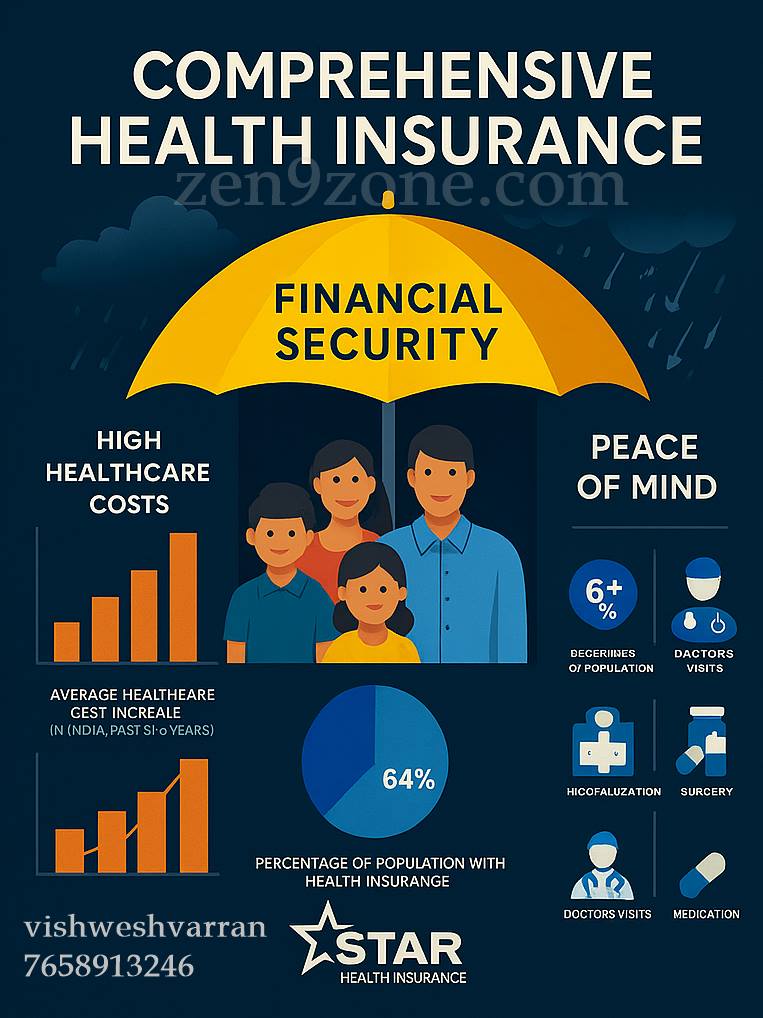
Comprehensive health insurance .Healthcare costs in India are steadily rising, making health insurance a non-negotiable aspect of financial planning. A comprehensive health insurance plan acts as a safety net, protecting you and your family from the potentially crippling financial burden of medical emergencies and illnesses. While various types of health insurance exist, comprehensive plans offer the broadest coverage, encompassing a wide range of medical expenses. This article will examine the core components of these plans, highlight their advantages, and address common concerns, drawing insights from Star Health Insurance’s offerings to provide a real-world example.
Understanding Comprehensive Health Insurance: Beyond the Basics
Comprehensive health insurance plans are designed to provide extensive coverage for a broad spectrum of medical expenses. Unlike basic plans that might have limitations on coverage or specific exclusions, these plans typically include:
**Hospitalization Expenses:** This is the cornerstone of any health insurance plan. Comprehensive plans cover room charges, doctor’s fees, surgical expenses, nursing care, medications, and other hospital-related costs.
**Pre and Post-Hospitalization Expenses:** Many plans extend coverage beyond the actual hospital stay, including expenses incurred before (pre-hospitalization) and after (post-hospitalization) admission. This can encompass diagnostic tests, doctor consultations, and rehabilitation costs.
**Ambulance Charges:** Emergency transportation to the hospital is often included, covering ambulance fees.
**Daycare Procedures:** Certain medical procedures, requiring less than 24 hours of hospitalization, are also covered under most comprehensive plans.
**Critical Illness Coverage:** Some comprehensive plans include coverage for specific critical illnesses, providing a lump-sum payment upon diagnosis. This can help manage the financial strain associated with such conditions.
**Maternity Benefits:** Many plans offer maternity benefits, covering expenses related to pregnancy, delivery, and postnatal care. However, this is often an add-on or requires a waiting period.
Star Health Insurance: A Closer Look at a Comprehensive Provider
Star Health Insurance is a prominent player in the Indian health insurance market, offering a range of comprehensive health insurance plans. While specific details vary based on the chosen plan, their offerings generally align with the key features mentioned above. we can see a focus on:
**Customization:** Star Health offers various plans catering to diverse needs and budgets. This allows individuals and families to select a plan that best suits their specific requirements.
**Network Hospitals:** Access to a wide network of hospitals across India is crucial. Star Health likely has a substantial network, simplifying the process of seeking medical care. (Note: The exact network needs verification directly on their website.)
**Claim Process:** The efficiency and transparency of the claim process are paramount. Understanding the procedures and documentation required is essential for a smooth experience. (Again, details are best obtained from Star Health directly.)
**Add-on Covers:** Many insurers provide options to enhance coverage through add-ons, such as critical illness riders, personal accident covers, or OPD (outpatient department) coverage. This allows you to customize your policy for added protection.
Analyzing Star Health’s Comprehensive Health Insurance Plans (Based on Website Information)
While a precise analysis requires accessing the specific plan details on their website, the general impression from their site suggests a focus on providing customizable, comprehensive coverage that addresses many common needs. Their emphasis on various plan options indicates a commitment to tailoring insurance to individual circumstances, a significant aspect of comprehensive health insurance.
** Key Considerations Before Choosing a Comprehensive Health Insurance Plan**
Selecting a comprehensive health insurance plan involves more than just comparing premiums. Several factors warrant careful consideration:
**Coverage Amount:** Ensure the sum insured is adequate to cover potential medical expenses. Consider factors like your age, health conditions, and lifestyle when determining the appropriate coverage amount.
**Network Hospitals:** Verify the network of hospitals associated with the insurance provider, ensuring access to quality healthcare facilities in your area.
**Pre-existing Conditions:** Clarify the insurer’s policy on pre-existing conditions. Some plans may have waiting periods or exclusions for pre-existing illnesses.
**Claim Settlement Ratio:** Check the insurer’s claim settlement ratio, which indicates their efficiency in processing and approving claims. A higher ratio is generally preferred.
**Exclusions and Limitations:** Carefully review the policy document to understand any exclusions or limitations on coverage. Be aware of any specific conditions or procedures that may not be covered.
**Premium Costs:** Balance the premium cost against the extent of coverage offered. A higher premium may offer more comprehensive coverage, but it’s essential to find the right balance for your budget.
**Navigating the Fine Print: Understanding Policy Documents**
Policy documents can often seem daunting, but understanding the key sections is crucial. Pay close attention to:
**Definition of terms:** Familiarize yourself with the definitions used in the policy, as this will influence how claims are assessed.
**Coverage details:** Thoroughly review the specific medical expenses covered and any limitations or exclusions.
**Claim procedures:** Understand the steps involved in filing a claim, including required documentation and timelines.
**Renewal terms:** Clarify the process for renewing your policy and any potential premium adjustments.
**Conclusion:**

Choosing the right comprehensive health insurance plan is a vital decision. This guide aims to provide a framework for navigating this complex landscape, using Star Health Insurance as a practical example. Remember to thoroughly research different providers, compare plans, and carefully review policy documents before making a commitment. Prioritizing comprehensive coverage, understanding your needs, and choosing a reputable insurer are key to ensuring adequate protection for your health and financial well-being. Don’t hesitate to consult with financial advisors or insurance professionals for personalized guidance.For personalized insurance guidance and plan selection, trustworthy guidance, contact Vishweshvarran, Insurance & Investment Consultant, phone 7658913246, website zen9zone.in. Zen9Zone’s experts are here to help—email, call, or drop in anytime for clear, actionable business insurance advice.
Related Articles




*Disclaimer:**This article provides general information and should not be considered financial or medical advice. Always consult with qualified professionals for personalized guidance. The information regarding Star Health Insurance is based on publicly available information and may not reflect the most current details. It’s crucial to verify all information directly with the insurer.
